Search with smiles :)
When a 🍔 isn’t a ‘hamburger.’ Search engines have problems understanding what we mean when searching with emojis characters.
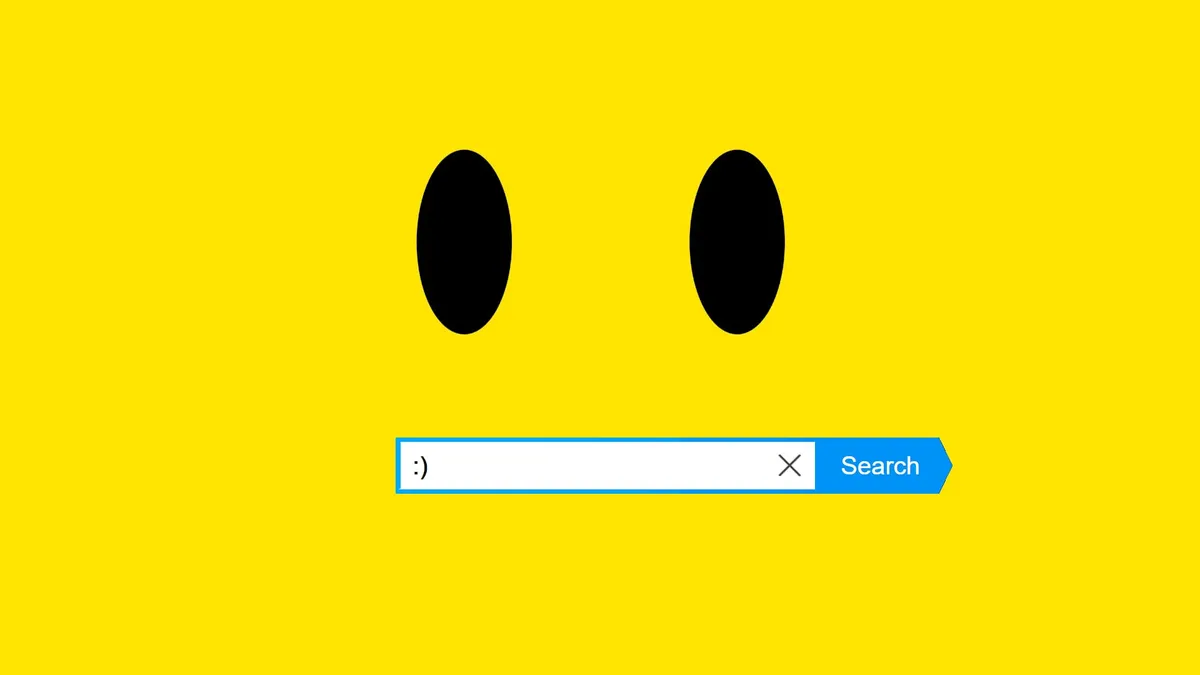
A two-character search reveals just how little the search-engines understand their human users. A colon followed by parentheses is widely used to express emotions. It’s especially popular in short messages like a text message or Twitter post. One place it doesn’t seem to have gained much traction is in search queries. Not that the search-engines would have understood it anyway.
A search for “China :( ” and “China :) ” produces the same results in all major search engines. A human receiving these queries would probably have weighted results for the two quite differently. China and a smile could show you travel options and reviews, and China and a frown could show critiques of the country’s press and religious oppression. The emoticons are a strong indicator of user intent and interest that’s being ignored.
Advertising-wise, it could be beneficial to have this indication of a user’s mood. It could be well-spent money to advertise a competing service to someone searching for a competitor’s name followed by a frown.
The smile and frown character sequences look like something the search-engines should have special-cased a long time ago. Yet, none of them seem to be doing it. It doesn’t fit with their normal text string-driven search approach.
All modern operating systems support ideograms for everyday things. These are called “emojis” and their general meaning and names are specified in the Unicode Standard. For example, 🍔 represents a “hamburger”. Bing and Google return no results if you just search for “🍔” or city-oriented results not filtered toward the food if you search for “🍔 London”. Yandex is the only one of the bunch that finds webpages that contains the literal hamburger character. They don’t transliterate it into the word or meaning “hamburger”. If the emoji is combined with an actual word, the emoji is ignored entirely by Yandex.
Bing announced support for emoji-capable search in October 2014, but seems to have since removed it.
A mapping between emojis and their names shouldn’t be too much to expect from the search engines. Emojis are especially useful on mobile were software keyboards have them one click away from their default letter keyboards. Searches for “✈️🚄” could be dumbly transliterated to “airplane high-speed train” (literal character names), or even “airport express train” (conceptual interpretation).
The only example I’ve found that uses transliteration is the local business directory Yelp. See it in action with a search for “🍣” (sushi.)